AtlasLight UI
Graph editor
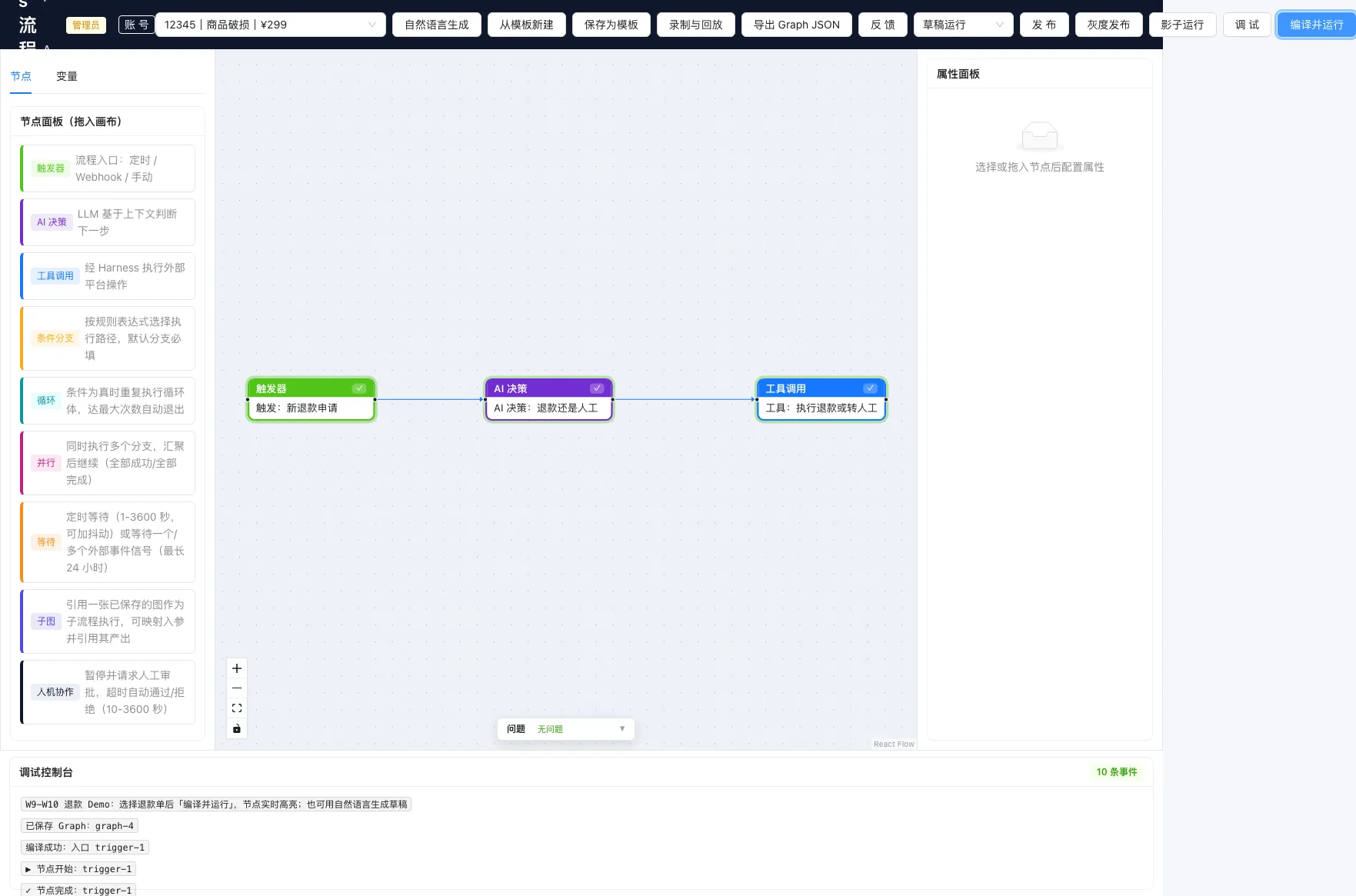
A trigger, an AI decision and a tool call connected as an executable graph, with the node palette and run console in view.
These products show how I take AI Agent, automation, and product ideas from workflow discovery through full-stack delivery.
Zeus is the orchestrator of my agent family: a decision engine that plans intents, routes work to the right agent, and remembers what happened. It talks to a shared model gateway for every LLM call, keeps a decaying long-term memory per namespace, and records every decision as a trace — so agent behaviour stays inspectable, costed, and reproducible instead of living in chat logs.
A compact view of the real products, delivery surfaces, and technologies behind my current work.
Four production screens from Atlas, Ops Console and Loom, shown in one 16:10 frame. Light and dark interfaces, a dense approval queue, a D3 policy decision and a unified review desk — the pilot set for replacing abstract visuals across the portfolio.
A trigger, an AI decision and a tool call connected as an executable graph, with the node palette and run console in view.
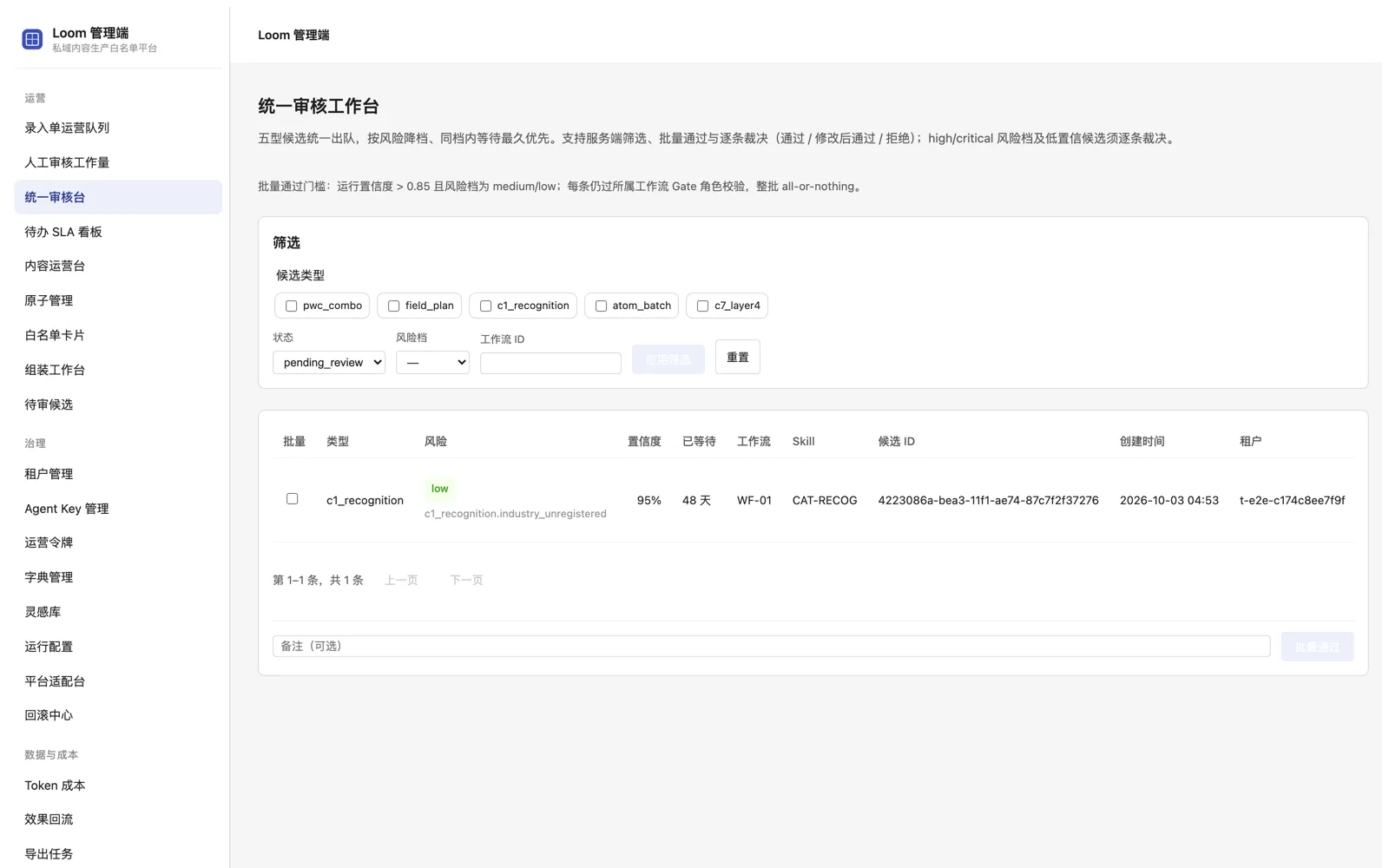
Candidate types, risk grades, confidence, wait time and workflow ownership gathered into one review queue with a bulk-approval gate.
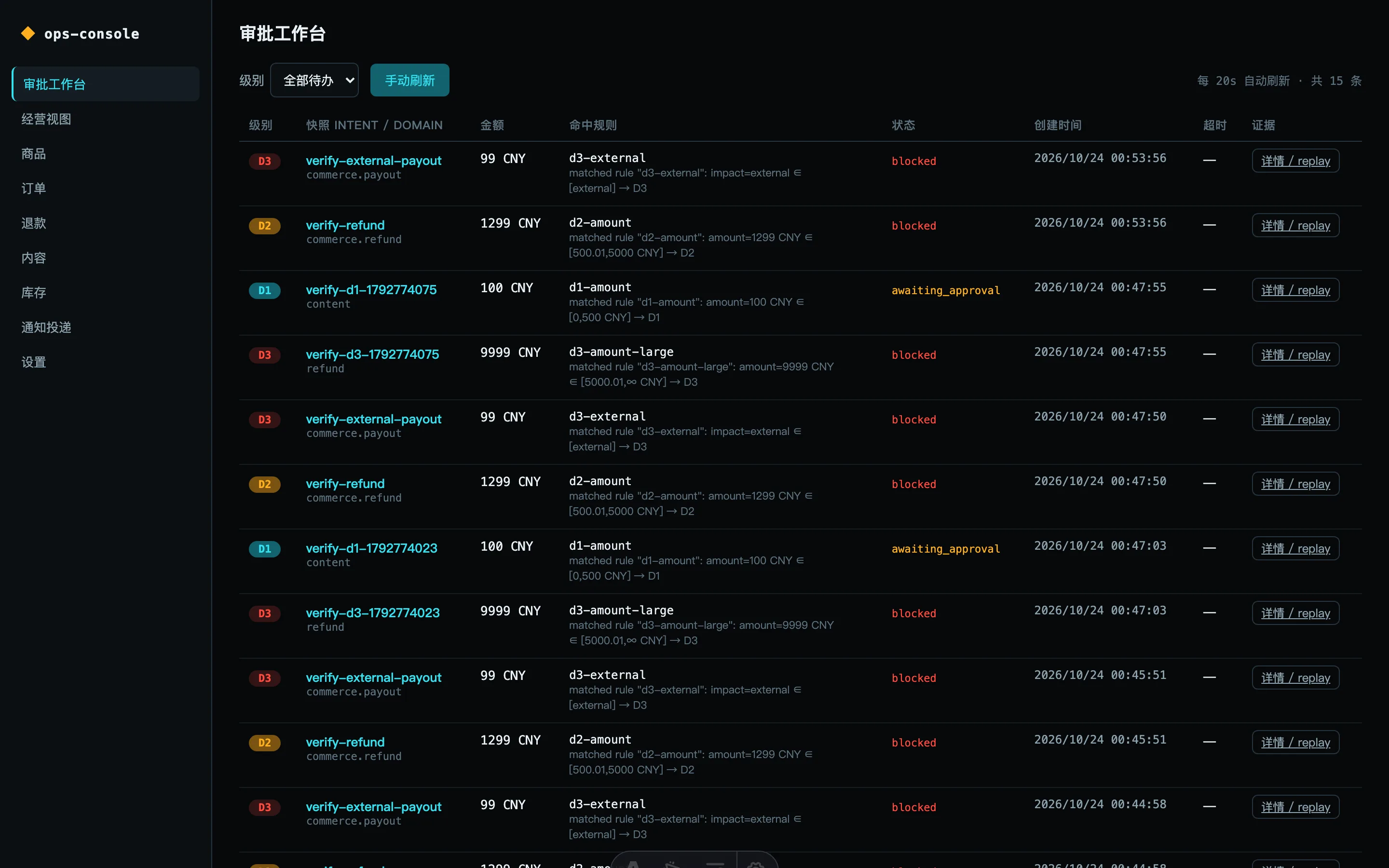
D1–D3 risk grades, matched rules, frozen amounts and blocked states collected in one operator queue.
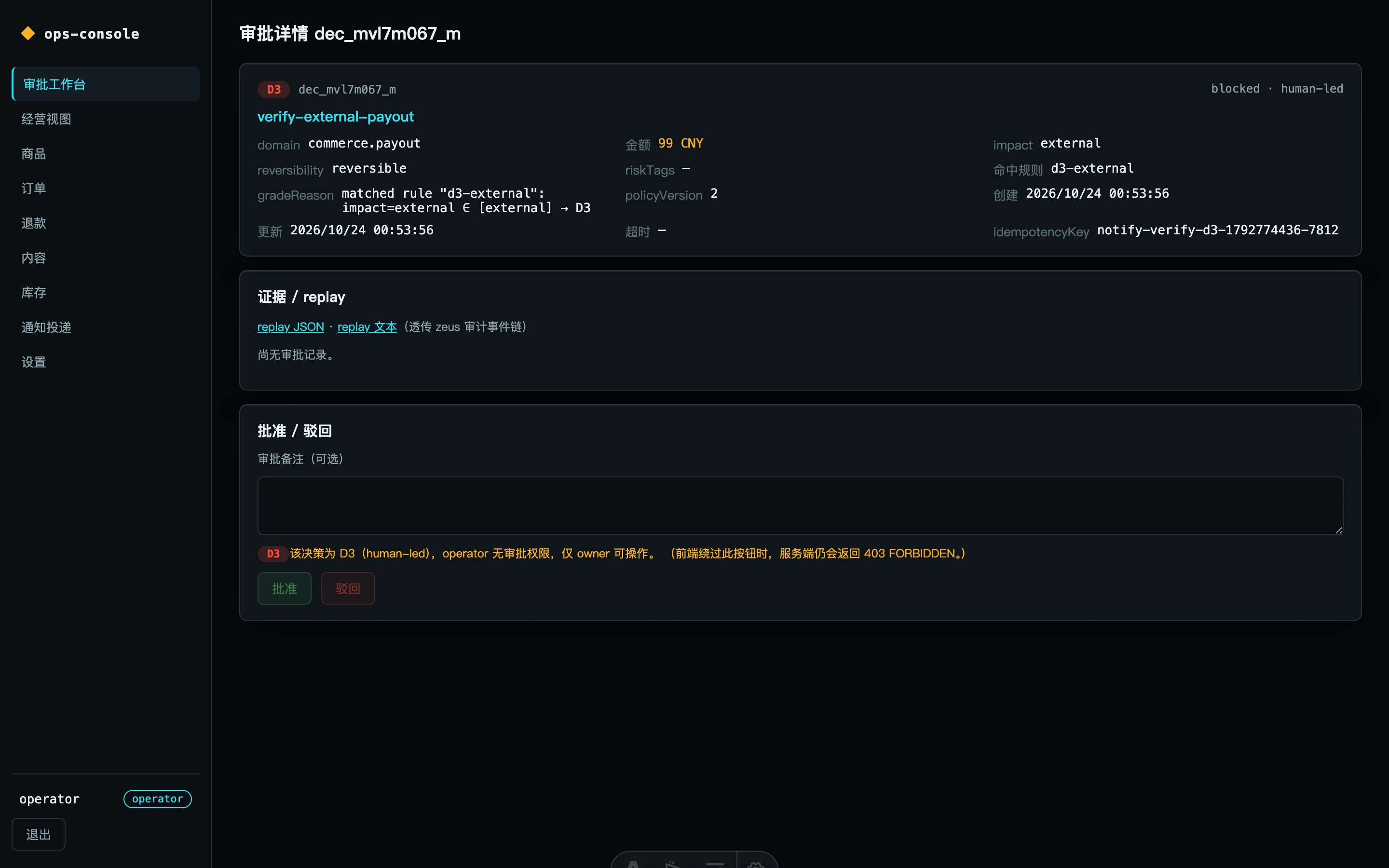
A blocked external payout exposes the rule, impact scope and the owner-only approval boundary before anything moves.
An AI operations-agent orchestration platform built on Harness (capability integration), Graph (executable causal graph) and Loop (OODA main loop), letting non-technical users define business processes with natural language or drag-and-drop while agents execute, self-heal and evolve.
A 13-stage content production chain that turns product information into publishable content. AI drafts candidates only, human gates decide, final_id is the single publishable exit, and feedback flows back into knowledge.
A gamified multi-agent orchestration workbench where every agent is a factory, tokens are the power supply, and output moves downstream by pipe and truck.
A local-first control plane for coding agents: discovers Claude Code, Codex, and OpenCode, runs each task in an isolated git worktree, and returns diffs, tests, and logs for human acceptance. Migrated from agent-dev; webapp-delivery plugin extraction is complete.
The minimal closed loop for self-operated commerce: catalog and SPU/SKU management, a fail-closed channel adapter registry (offline sandbox replay until live credentials land), idempotent order ingestion, zeus-driven money and refund decisions, a refund state machine, and full event audit across SQLite/PostgreSQL.
An operations personal agent for growth: a read-only research loop (deterministic signal engine, human-reviewed insights and watermarked reports), a customer mining and CRM pipeline (intent-signal to lead promotion, a lead state machine, follow-up timeline and watch reminders), and zeus-gated email outreach where nothing is ever sent without sign-off. Runs offline by default; SQLite/PostgreSQL dual-dialect.
The internal operations console for the Tier 0 product family: a single-process SSR workspace where approvals, orders, refunds, content, and inventory no longer require direct API calls. It aggregates the zeus decision and organization APIs plus the commerce-os API server-side, with owner/operator RBAC, a D1-D3 approval workbench, a read-only operating dashboard, and webhook notifications for suspended or timed-out decisions.
An SEO agent for the Tier 0 family: Google Search Console data plus SERP tracking, closing a daily "write one, fix one" PR loop. Reuses the zeus, loom and growth-os kernels; built and fully tested, not yet launched and pending dogfooding.
The unified model management center for the Tier 0 family: a control plane plus UI covering providers, API key pools with quota failover, model aliases, usage and cost dashboards, and budget governance. Under active development.
Local-only OpenTelemetry pipeline for the Tier 0 family: a collector that receives OTLP traces and a Tempo backend storing them on disk, all loopback-bound with no external dial-out. Configuration ready; containers pending registry recovery.
Resumes lie, code does not. JobAgent turns real GitHub repos into verifiable skill profiles from commits, PRs and collaboration records, and flags AI-generated repos so companies hire people who have actually shipped.
A learning layer that turns the English you already use with AI into a personal course. Captures reusable expressions from real conversations through a skill, MCP tools, or the CLI, then rebuilds them as practice shaped around your own work.
A local-first macOS dashboard for watching multiple AI app windows at once: one card per target with a live thumbnail and reply state, plus one-click jump back to the target window. Screen content stays on-device.
A local-first Git workbench bound to loopback by default: a GitKraken-style commit graph with CI status dots and image diffs, plus a lightweight pull-request control tower, in one bilingual interface. No cloud service is required.
A Chrome and Edge Manifest V3 extension that groups tabs by hostname, preserves user-created groups, and syncs grouping preferences after sign-in.
A browser extension for in-page word lookup and vocabulary collection, designed to work with the WordBase ecosystem.
A contextual vocabulary-learning workspace spanning web, desktop, and mobile, paired with WordPicker for browser-based lookup and word collection.
See it first, then run the numbers. A financial-literacy simulation (not investment advice): play a wealthy persona to feel the real holding cost and risk of wealth, then plug in your own income to calculate your enough-line, gap, and timeline.
An Electron desktop application for organizing software, workflows, favorites, shares, and usage insights, with a companion web experience.